Botox® vs. Dysport®: Which Wrinkle Treatment Is Right for You
Injectables & Aesthetics
A comprehensive side-by-side guide to two FDA-approved wrinkle relaxers — how they work, what they treat, and how to choose the right one for your face in Oklahoma City.
Reviewed by Nasim Karameh, APRN • Last Updated: July 2026 • 10–12 min read
If you have been thinking about reducing fine lines and wrinkles, you have likely come across Botox® and Dysport®. These two injectable treatments are among the most popular non-surgical cosmetic procedures available today — and for good reason.
Both are designed to soften dynamic wrinkles caused by repeated facial expressions, helping patients achieve a smoother, more refreshed appearance without surgery or significant downtime.
Although Botox and Dysport work in very similar ways, they are not identical. Each has unique characteristics that may make it a better choice depending on your facial anatomy, treatment goals, and personal preferences.
At
AesTonic Med Spa & Wellness, we believe every treatment should be personalized. Rather than recommending the same product for everyone, we evaluate your facial muscles, movement patterns, and aesthetic goals to determine which option is best suited for you. We serve patients throughout
Oklahoma City, Edmond, and surrounding communities.
Key Takeaways
- Botox® and Dysport® are both FDA-approved prescription neurotoxins used to temporarily relax targeted facial muscles.✓
- Both are highly effective for treating forehead lines, frown lines, and crow's feet.✓
- Dysport® may begin working slightly sooner in some patients; both typically provide similar overall results.✓
- Neither product is universally better. The right choice depends on your anatomy, treatment area, and desired outcome.✓
- A personalized consultation with an experienced medical provider is the best way to determine which treatment is right for you.
What Are Neurotoxins?
Wrinkles are a natural part of aging, but not all wrinkles form the same way. Some develop because of sun exposure or collagen loss. Others — known as dynamic wrinkles — are caused by repeated facial expressions such as smiling, squinting, or raising your eyebrows.
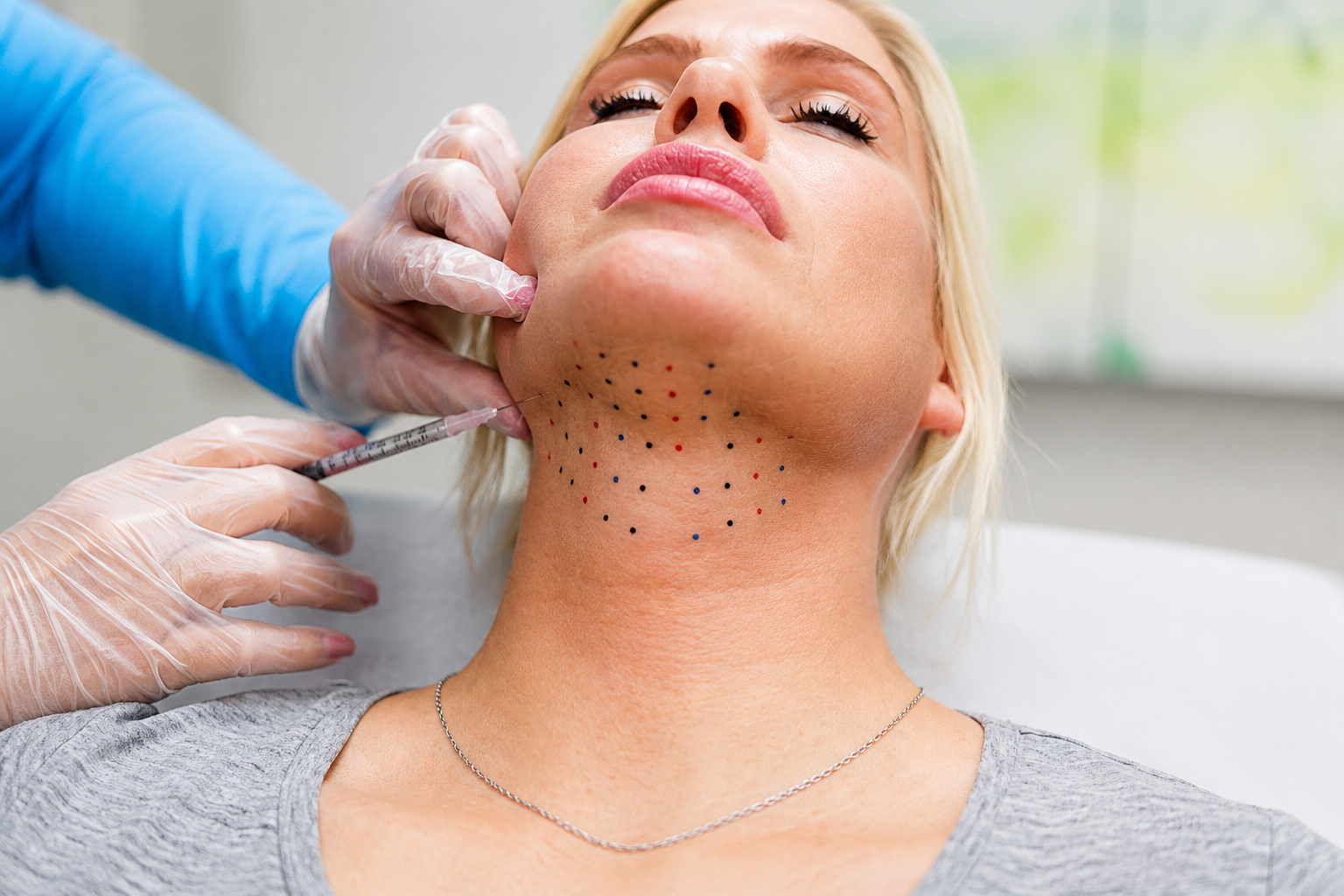
Neurotoxins are injectable medications that temporarily reduce the activity of specific facial muscles. By relaxing these muscles, they soften existing expression lines while reducing the formation of deeper wrinkles over time. Treatment is quick, minimally invasive, and requires little to no downtime.
What Is Botox®?
Botox Cosmetic® was the first FDA-approved neurotoxin for cosmetic use and remains one of the most recognized aesthetic treatments available today. Its active ingredient, onabotulinumtoxinA, temporarily blocks communication between nerves and targeted muscles. As the treated muscles relax, the overlying skin becomes smoother and dynamic wrinkles become less noticeable.
Botox® is commonly used to treat:
- Forehead lines
- Glabellar lines (the "11 lines" between the eyebrows)
- Crow's feet
- Bunny lines
- Lip flip
- Chin dimpling
- Neck bands
- Jawline slimming (selected patients)
- Excessive sweating (hyperhidrosis)
Most treatments take approximately
10–20 minutes, allowing patients to return to normal daily activities immediately afterward.
What Is Dysport®?
Dysport® is another FDA-approved neurotoxin with a long history of safe and effective cosmetic use. Its active ingredient, abobotulinumtoxinA, works in the same general way as Botox® by relaxing targeted muscles responsible for expression lines.
Many experienced injectors appreciate Dysport® because it may spread slightly more within the treatment area, making it particularly useful for larger muscles such as those in the forehead. Dysport® is commonly used to treat forehead lines, frown lines, crow's feet, neck bands, and for brow lifting and jawline contouring.
Like Botox®, treatment is performed in-office with minimal discomfort and virtually no recovery time.
Botox® vs. Dysport®: Side-by-Side Comparison
Both products are FDA-approved injectable neurotoxins that temporarily relax targeted facial muscles to reduce dynamic wrinkles. While they work similarly, there are differences that may influence which treatment is best for you.
| Feature | Botox® | Dysport® |
|---|---|---|
| FDA Approved | Yes | Yes |
| Active Ingredient | OnabotulinumtoxinA | AbobotulinumtoxinA |
| Common Treatment Areas | Forehead, frown lines, crow's feet | Forehead, frown lines, crow's feet |
| Typical Onset | 3–7 days | 2–5 days |
| Peak Results | About 2 weeks | About 2 weeks |
| Duration | Approximately 3–4 months | Approximately 3–4 months |
| Treatment Time | 10–20 minutes | 10–20 minutes |
| Downtime | Minimal | Minimal |
| Best For | Precise muscle targeting | Larger treatment areas |
How Do They Work?
Every time you smile, squint, laugh, or raise your eyebrows, your facial muscles contract. Over thousands of repeated expressions, these movements gradually create permanent lines in the skin.
Botox® and Dysport® temporarily interrupt the communication between the nerve and the treated muscle. As the muscle relaxes, the overlying skin smooths out, reducing the appearance of dynamic wrinkles while helping prevent them from deepening over time.
It is important to understand that these treatments do
not freeze your face. When properly administered, they simply soften excessive muscle activity while allowing you to maintain natural facial expressions.
Treatment Areas
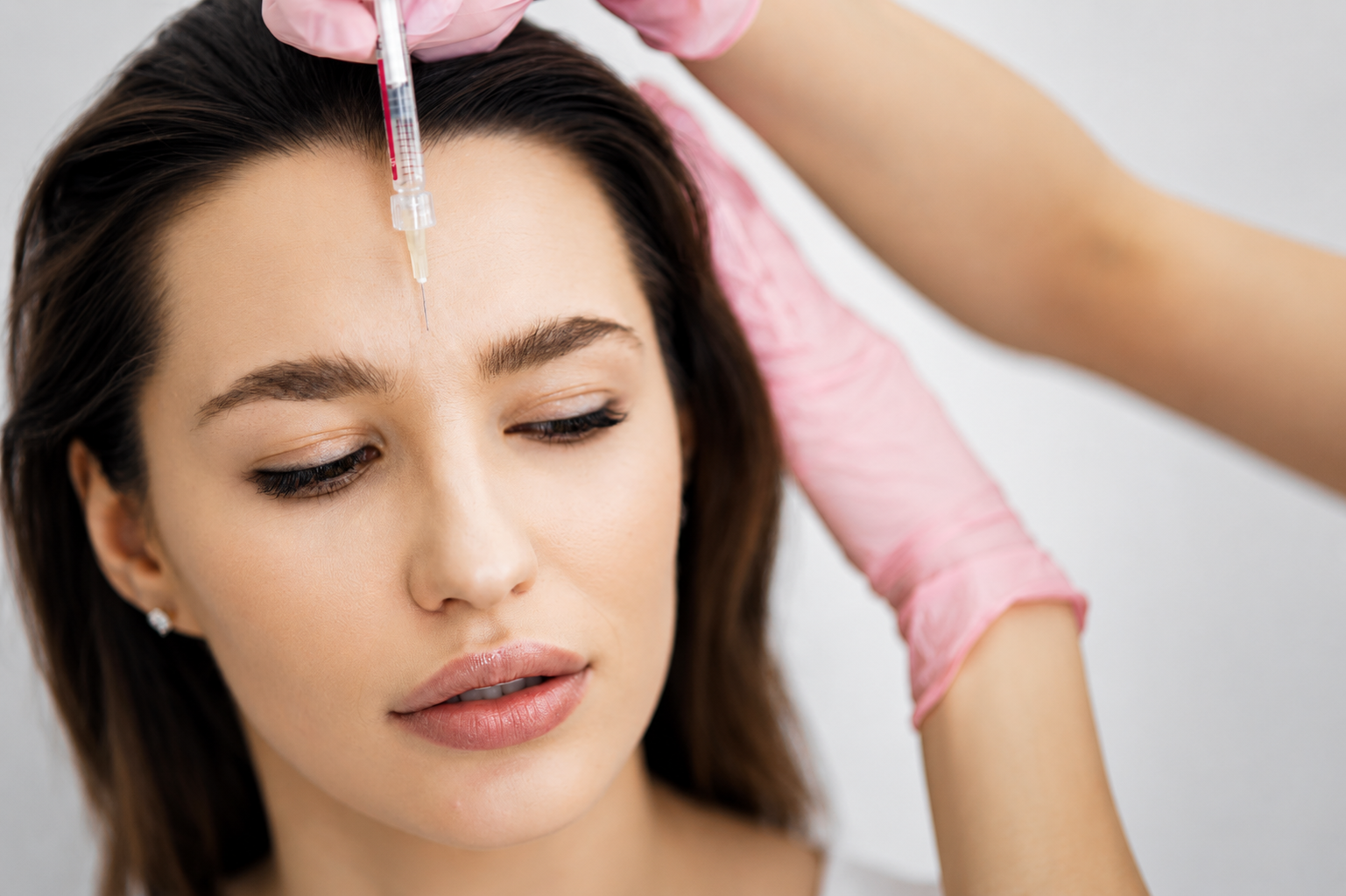
Forehead Lines
Horizontal forehead lines develop from repeatedly raising your eyebrows. Neurotoxins relax these muscles, helping create a smoother forehead while preserving natural movement.
Frown Lines (The "11 Lines")
The vertical lines between the eyebrows are often among the first signs of facial aging. Because these muscles are naturally stronger, they usually require more units than other treatment areas. Treating this area can create a more relaxed, approachable appearance.
Crow's Feet
The fine lines at the outer corners of the eyes develop from smiling and squinting. Neurotoxin treatment softens these lines while allowing your smile to remain natural and expressive.
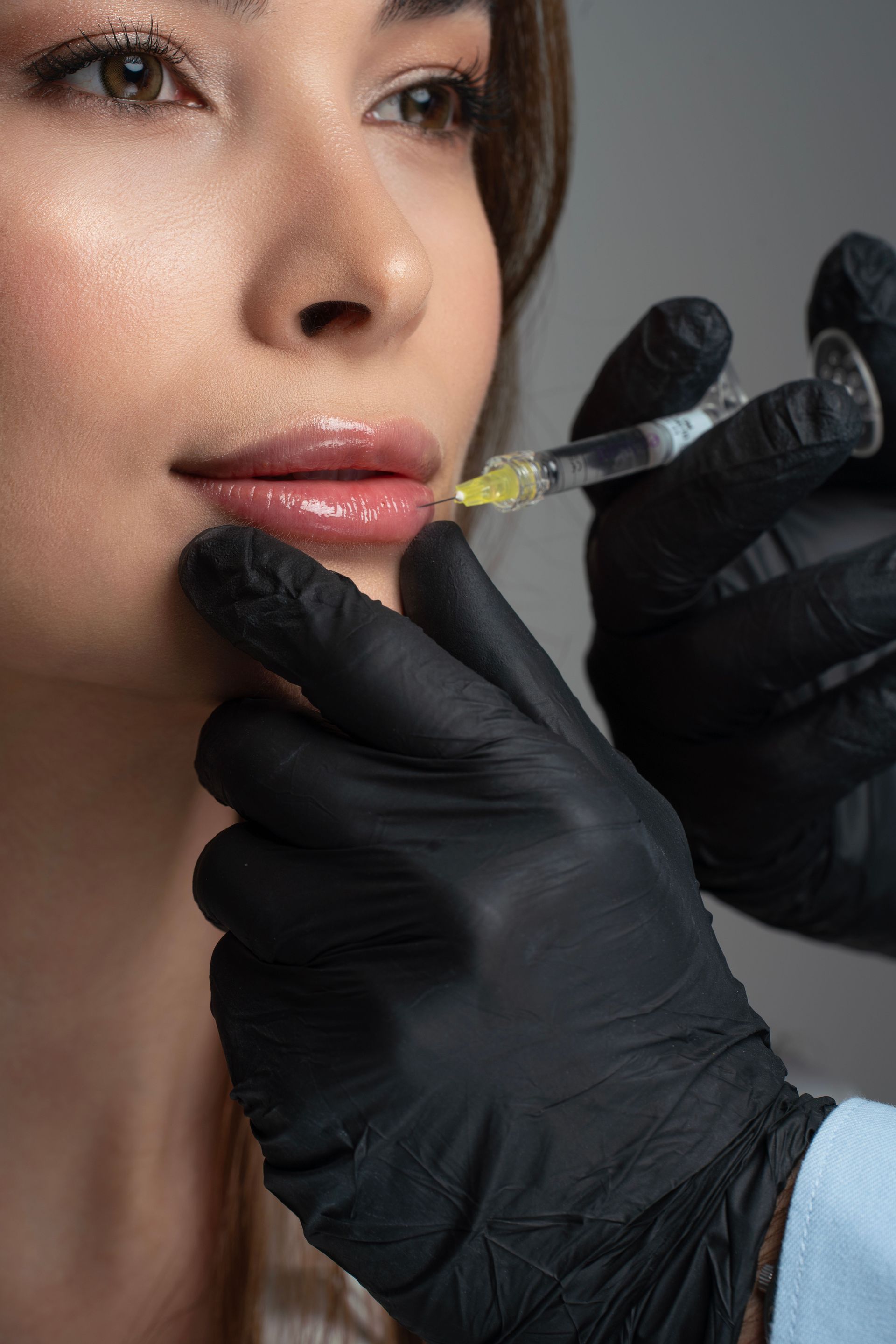
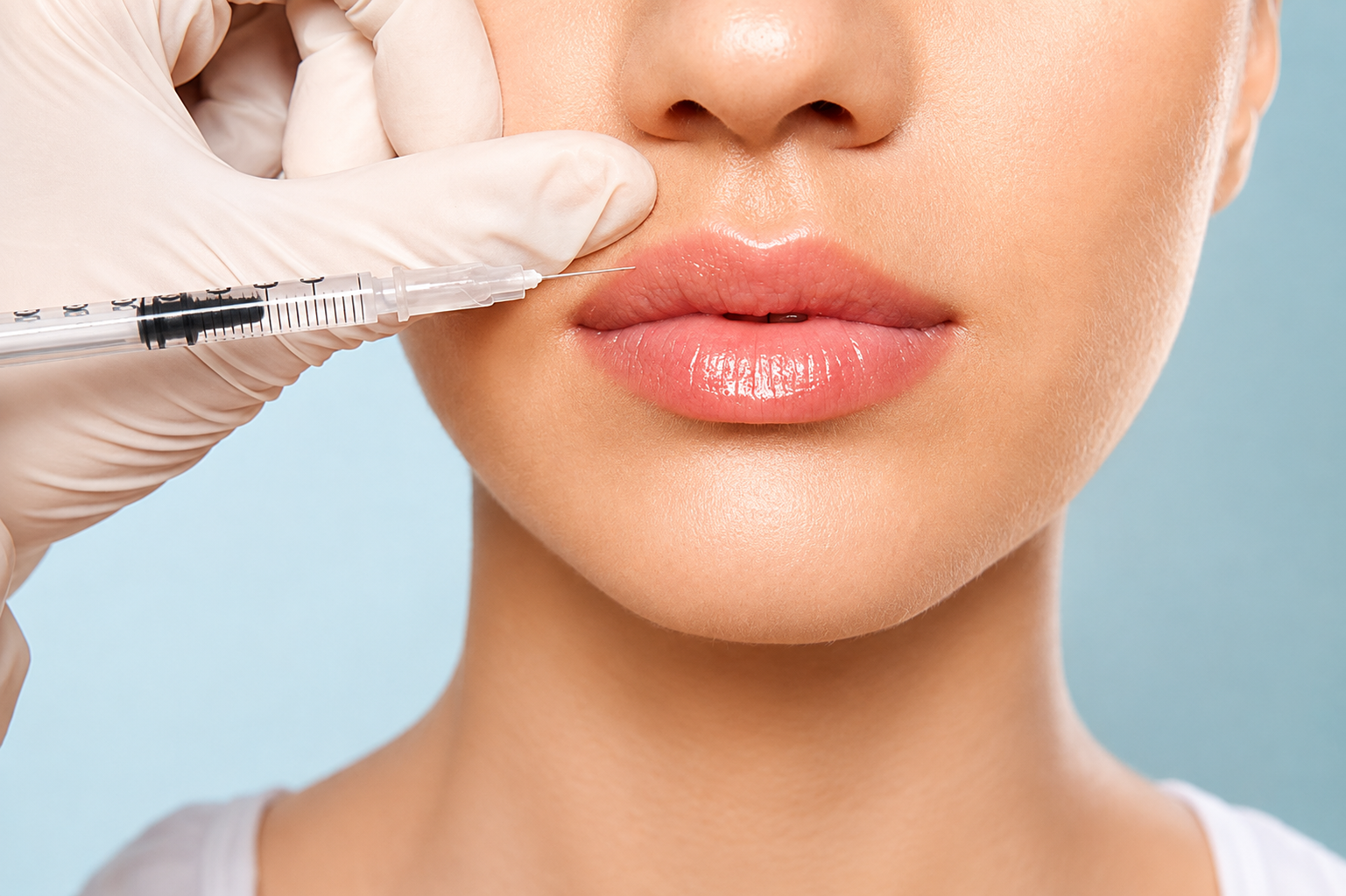
Lip Flip
A few carefully placed units above the upper lip allow the lip to gently roll outward, creating the appearance of a fuller upper lip without dermal fillers.
Masseter / Jaw Slimming
Patients with enlarged masseter muscles from clenching or grinding may benefit from neurotoxin injections. Over time, relaxing these muscles can create a slimmer facial profile and reduce jaw discomfort in some patients.
Which Treatment Works Faster?
Many patients notice Botox® initial improvement within approximately 3–5 days, with continued improvement to day 7–10, and full results at 10–14 days.
Dysport® may begin working a little sooner — initial improvement around 2–3 days, with full results also at 10–14 days.
While some patients notice Dysport® working slightly sooner, both products generally provide similar results by the two-week mark.
How Long Do Results Last?
Both treatments are temporary. Most patients enjoy smoother skin for approximately 3–4 months, although individual results vary. Longevity depends on muscle strength, metabolism, physical activity level, treatment area, and individual response.
Patients who maintain regular treatment schedules often find their results become easier to maintain over time.
Which Looks More Natural?
The biggest myth surrounding neurotoxins is that they create a frozen appearance. The truth is that natural-looking results depend far more on the injector's technique than on the product itself.
An experienced medical injector carefully evaluates facial anatomy, muscle strength, symmetry, and individual aesthetic goals. The goal isn't to eliminate every line — it's to create a refreshed appearance that still looks like you.
At
AesTonic Med Spa & Wellness, we believe the best compliment is hearing, "You look well-rested," rather than, "Did you get Botox?"
Which Costs Less?
Botox® and Dysport® are measured using different unit systems, meaning the number of units required is not directly comparable. It typically takes approximately 2.5 to 3 units of Dysport® to produce an effect similar to 1 unit of Botox®. This is why Dysport® is often priced at a lower cost per unit.
At first glance, Dysport® may appear less expensive — but because more units are generally required, the total treatment cost is often very similar. Rather than focusing solely on the price per unit, we recommend considering the experience of your injector, your treatment goals, and overall value.
Preventative Treatment: Can You Prevent Wrinkles Before They Form?
Many patients assume Botox® is only for treating deep wrinkles, but one of its most valuable uses is prevention. Dynamic wrinkles begin forming years before they become permanently visible. By relaxing these muscles before wrinkles become deeply etched, neurotoxin treatments may help delay the development of more noticeable lines over time.
Patients in their late 20s and 30s often choose preventative treatment because it allows them to maintain smoother skin with smaller amounts of product. Preventative treatment is not about eliminating facial expressions — it reduces repetitive muscle movement while preserving natural animation.
Who Is a Good Candidate?
Most healthy adults bothered by dynamic wrinkles may be candidates for treatment. You may benefit if you have forehead lines, frown lines, crow's feet, bunny lines, chin dimpling, neck bands, an overactive jaw muscle, or early signs of facial aging. The best candidates have realistic expectations and understand that neurotoxins soften wrinkles rather than permanently removing them.
Aftercare
- Remain upright for approximately four hours after treatment.
- Avoid rubbing or massaging the treated areas for the rest of the day.
- Avoid strenuous exercise until the following day unless instructed otherwise.
- Skip saunas, steam rooms, and excessive heat for the remainder of the day.
- Avoid facials or facial massages for approximately 24 hours.
- Continue normal facial expressions — gentle movement of the treated muscles is acceptable.
Common Myths
Myth:
Botox® freezes your face.
Fact:
Properly performed treatment softens excessive muscle movement while preserving natural facial expressions.
Myth: Once you start, you can never stop.
Fact: If you stop treatment, the effects gradually wear off and your muscles return to their normal activity. You will not look worse because you stopped.
Myth: Dysport® is weaker than Botox®.
Fact: They use different unit measurements. They are simply dosed differently and should not be compared unit for unit.
Myth: Results are immediate.
Fact:
Both require several days to begin working, with full results typically developing within approximately two weeks.
Frequently Asked Questions
How long do Botox® and Dysport® results last?
Most patients enjoy smoother skin for approximately 3 to 4 months. Individual results vary based on metabolism, muscle strength, treatment area, and lifestyle.
Will I still look natural?
Yes. Our approach focuses on softening wrinkles while preserving your unique facial expressions and personality. The goal is a refreshed appearance — not a frozen one.
Is there any downtime?
There is very little downtime. Most patients return to work and normal daily activities immediately after treatment. Mild redness or tiny bumps at the injection sites usually resolve within a few hours.
Can Botox® help prevent future wrinkles?
Yes. Many patients begin treatment before deep wrinkles develop. By reducing repetitive muscle contractions, neurotoxins may help slow the formation of deeper expression lines over time.
Do you use Botox® or Dysport® at AesTonic?
Both. They are both FDA-approved wrinkle relaxers that work by relaxing the muscles responsible for expression lines. Your provider recommends the best fit for your anatomy and goals at your free consultation.
How many units will I need?
The answer depends entirely on your individual anatomy — muscle strength, gender, age, facial movement, and treatment areas all play a role. We discuss this in detail during your consultation.
Schedule Your Botox® or Dysport® Consultation
Ready to soften fine lines and achieve a refreshed, natural appearance? Every consultation at AesTonic is personalized to your unique facial anatomy and goals. Serving Oklahoma City, Edmond, and surrounding communities.
AesTonic Med Spa & Wellness · Oklahoma City ·
(405) 967-7774
Nasim Karameh, AGACNP-C, APRN
Founder and Medical Provider, AesTonic Med Spa & Wellness. More than 20 years of combined medical experience in emergency medicine, critical care, cardiology, and aesthetic medicine. Botox® is a registered trademark of AbbVie Inc. Dysport® is a registered trademark of Ipsen Biopharm Ltd.
Medical disclaimer: This article is intended for educational purposes only and should not be interpreted as medical advice. Every patient is unique, and treatment recommendations should always be based on an in-person consultation and medical evaluation performed by a qualified healthcare provider. Individual results vary, and no specific cosmetic outcome can be guaranteed.
Share This Blog